About Johns Hopkins
spacer for safari
From the home page

Addressing the Global Water Challenge

It's estimated that in 20 years, four billion people will live in water-stressed countries. Increased usage and pollution caused by a growing global population is further damaging the world's water supply each year. Considering that 145 countries have shared waterways, the increased scarcity will only heighten global tensions. The circumstances are only exacerbated by manmade and natural disasters.

Through its tradition of collaborative, interdisciplinary research, the Johns Hopkins University has united public health experts with engineers with climatologists in an effort to improve the quality and quantity of clean water throughout the world.

Below is a sampling of the faculty and student expertise across the university and the ways in which they are battling this developing international crisis.

Wolman
Abel Wolman, right, and
his son Reds Wolman

The Wolmans: Luminaries of the Global Water Program

Dating back for nearly a century, Johns Hopkins University has been at the forefront of improving international access to pure, consumable water. Abel Wolman, who The New York Times called the "friend of the thirsty," helped develop the modern chlorination system and founded the department of sanitary engineering, which is now the department of geography and engineering. His son, M. Gordon "Reds" Wolman, who passed away in 2010, was a leading thinker in geomorphology.

Read more about Abel and Reds Wolman's contributions to global water sanitation.


Kellogg Schwab
Kellogg Schwab

Improving methods for water standard evaluation

Simply providing access to water does not improve health. The water must be drinkable and free of bacteria and other contaminants that only increase health risks. Kellogg Schwab, the director of both the Global Water Program and the Center for Water and Health, has collaborated with the federal government's Centers for Disease Control and Prevention to investigate numerous waterborne and foodborne outbreaks of viral gastroenteritis. Under his direction, the Global Water Program is evaluating international water quality monitoring methods in order to improve the processes and safeguard against inadequate water safety measures.

Read more about Kellogg Schwab's research: Technology Based Evalaution of Waterborne Contaminants in International Settings.


Winston Yu
Winston Yu

Bringing water policy and infrastructure to South Asia

Bangladesh is one of the most flood-prone countries in the world. With the majority of the nation lying less than five yards above sea level and both the Ganges and Brahmaputra rivers running through the nation, Bangladesh is at constant risk. SAIS professor Winston Yu is the Senior Water Resources Specialist at the World Bank in the South Asia region, overseeing project investments, studies and research in Bangladesh, Pakistan and India. He is currently working on a $1 billion investment in the state of Uttar Pradesh in India to strengthen and modernize the irrigation and water resource sectors.

Winston Yu speaks at the Bloomberg School of Public Health Tuesday, March 29 about "The Power, Promise, and Turmoil - Water Challenges in South Asia"


Edward Bouwer
Edward Bouwer

Cleaning up on the grandest scale

More than 5 million barrels of crude oils spilled into the Gulf of Mexico last summer during the Deepwater Horizon accident. Edward Bouwer, the chair and Abel Wolman Professor of Environmental Engineering, who has spent a lifetime studying the health of the world's water systems was called on to assess the damage. His laboratory also was tapped to paint a pre-oil spill picture of the health of Sarasota Bay, looking at everything from sediments to marine life. In the broadest terms, Bouwer, who also provided his expertise during the Exxon Valdez spill more than 20 years ago, works to assess biotransformation of organic contaminants, groundwater and sediment contamination, biofilm processes and other issues related to the remediation of waste sites.

Read Edward Bouwer's response to whether or not the Gulf can recover from the massive oil spill.


Melissa Opryszko
Melissa Opryszko

Providing potable water solutions to low-income rural populations

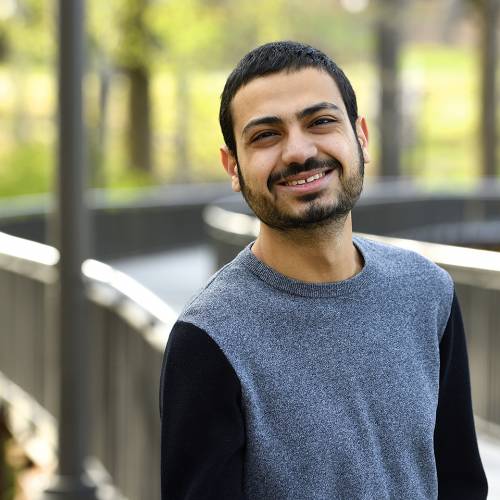
The convenience of turning on a kitchen faucet is a luxury unavailable low-income rural populations throughout the world. Of the 884 million people without access to improved water, 84% of them live in such environments, risking serious health problems. Melissa Opryszko, a Bloomberg School of Public Health Ph.D. candidate, has focused her research on international drinking water, especially household and community-based systems. She has collaborated with Kellogg Schwab, director of the Global Water Program, to develop a kiosk system in Ghana to test the effectiveness of such a potable water solution in improving community health.

Read more about Melissa Opryszko's research in Ghana.


Yaqi You
Yaqi You

Seeking sustainable agricultural practices

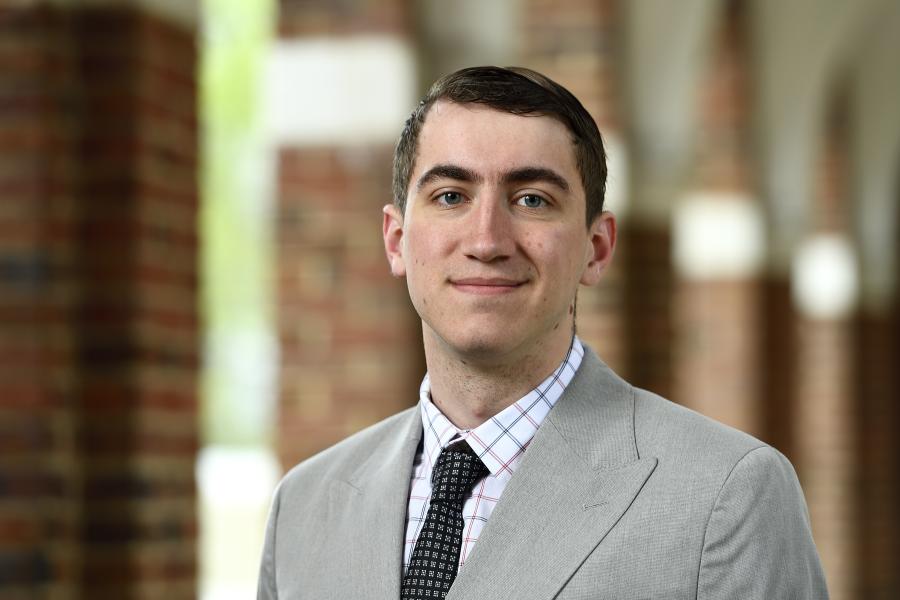
Chicken breeding, the fuel to the economic engine of Maryland's Eastern Shore for generations, may be permanently damaging the region. The Delmarva Peninsula is home to one of the most polluted estuaries in the country, and the 650 million pounds of chicken manure produced annually are only complicating any attempt to improve water quality to the point that fishermen who once relied on the state's waterways for income can return to work. Yaqi You, an Environmental Engineering Ph.D. candidate, has worked with Markus Hilpert of the Whiting School of Engineering to study the region. Her research focuses on the transfer of antibiotic resistance genes, as well as the corresponding influence on bacterial resistance in the environment.

Read more about Yaqi You and Markus Hilpert's visit to a chicken farm on Maryland's Delmarva Peninsula


Doug Woodring
Doug Woodring

Capturing the "plastic vortex"

The "plastic vortex" sounds like something of a post-apocalyptic science fiction tale. Instead, it's a mass of garbage and refuse the size of Texas floating in the northern Pacific Ocean. SAIS alumnus Doug Woodring founded Project Kaisei in 2009 in an effort to combat the growing environmental blight. The organization was recognized in 2009 by the United Nations Environment Programme as a Climate Hero and by Google as a Google Earth Hero.

Read more about Doug Woodring, Project Kaisei and the "plastic vortex" website.


Robert Dalrymple
Robert Dalrymple

Preparing for extreme weather

It's been five years since Hurricane Katrina tore through New Orleans and the gulf coast is still recovering from the storm's impact. Robert Anthony Dalrymple, the Whiting School's Willard & Lillian Hackerman Professor of Civil Engineering, was part of the first official team of engineers to examine the breaches around the city, looking for the failure mechanisms of the levees. A coastal engineer, he works to better predict the behavior of the shoreline during short-term events like a hurricane or tsunami, and over longer durations, like the next century of development. As a scientist, he analyzes and models waves. As an engineer, he studies the human implications of the moving water.

Read more about Robert Dalrymple in the Johns Hopkins Magazine article "Force of Nature"


Joseph Katz
Joseph Katz

Understanding the ocean's greatest depths

Joseph Katz, the William F. Ward Sr. Distinguished Professor in the Whiting School's Department of Mechanical Engineering, studies the structure and flow of turbulence. When it comes to understanding marine ecosystems, this work is very important. Among other developments, Katz has used his expertise to better understand the bottom boundary layer of the coastal ocean. He also has worked to develop a way to measure the spatial distributions of plankton, particles and bubbles in the ocean. He has developed optical instrumentation, including submersible holography and Particle Image Velocimetry systems, to assess the behavior of organisms that congregate in the depths of waterways.

Read more about Joseph Katz' research of microbes linked to fish kills in the Chesapeake Bay.


Homepage images courtesy for FEMA, Pablo Yori and the Global Water Program